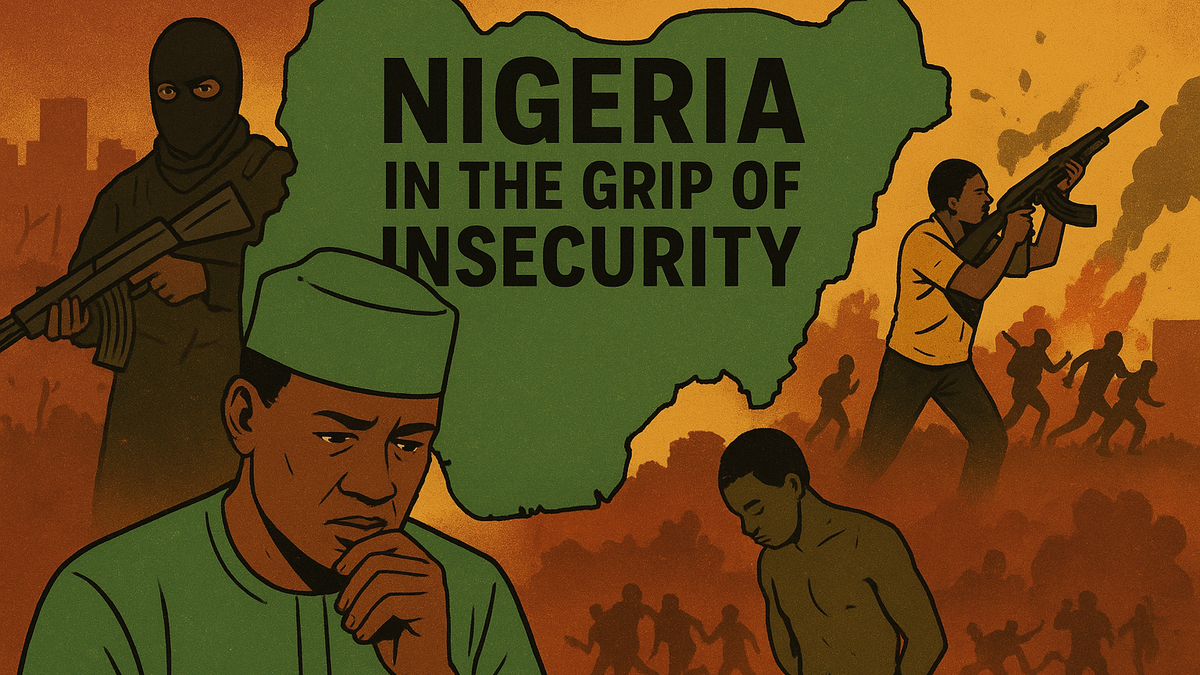
Nigeria is currently engulfed in one of the most complex security crises in its modern history. Across the country, ordinary citizens live under the persistent threat of banditry, kidnapping, terrorism, communal violence, and armed robbery. The scale of this insecurity is reflected in numerous reports. The NBS Crime Experience and Security Perception Survey (2024) estimates that over 51 million crime incidents were experienced between May 2023 and April 2024, with households paying an astonishing ₦2.23 trillion in ransom. Although groups like the CNG questioned the methodology and representativeness of the data, independently verified reports still reveal an alarming security environment. Nextier Research documented more than 5,000 fatalities and over 3,000 kidnappings in 15 months, while the first quarter of 2025 alone saw over 1,400 deaths and 537 kidnappings. Irrespective of the dispute over exact figures, the message is clear: insecurity is pervasive, persistent, and worsening across Nigeria.
Root Causes of the Crisis
Nigeria’s insecurity stems from deep structural vulnerabilities that have accumulated over decades. Weak security institutions form a critical part of the problem. The police force, military, and intelligence bodies struggle with inadequate funding, poor welfare, outdated equipment, corruption, and slow response times, especially in rural areas where security presence is often minimal. Poverty and youth unemployment further deepen insecurity, as millions of frustrated young Nigerians find themselves vulnerable to recruitment by criminal gangs, extremist groups, and political militias.
Compounding these issues is the proliferation of illegal firearms due to porous borders and thriving black markets. Communal and ethno-religious tensions especially in Plateau, Kaduna, Benue, Taraba, and the North West regularly erupt into violence. Terrorist groups such as Boko Haram and ISWAP, together with increasingly sophisticated bandit networks, exploit these social and economic weaknesses. Environmental stressors, including climate change and desertification, shrink viable farmland and intensify competition over resources. On top of all this, weak governance, corruption, and an overloaded justice system undermine accountability, allowing criminal actors to operate with shocking impunity.
Human, Economic, and Social Consequences
The human consequences of insecurity are profound. Families across the country endure trauma, displacement, fear, and in too many cases, the permanent loss of loved ones. The economic impacts are equally devastating. Ransom payments drain households of savings, while insecurity disrupts agricultural production as farmers abandon their land. Schools and businesses close or scale back operations, and investors both domestic and foreign avoid high-risk areas. This widespread insecurity also erodes social trust. Communities turn to vigilante groups or take up arms themselves, creating unregulated systems of self-help security that sometimes contribute to further instability. Criminal networks, fueled by ransom payments and illicit weapons flows, expand their reach in a deadly cycle that continuously reinforces the crisis.
The Debate on Civilian Gun Ownership: A Solution or a Dangerous Gamble?
As the state struggles to provide safety, calls for more permissive civilian gun ownership have grown louder. Some lawmakers, activists, and community leaders argue that allowing citizens to legally arm themselves would help level the playing field against heavily armed criminals. However, international evidence shows that widespread gun ownership produces mixed outcomes that depend heavily on institutional strength.
Countries with strict gun laws and strong policing such as Japan, the UK, Germany, and Australia tend to have very low homicide and firearm-related death rates. The United States, with the highest gun ownership rate in the world, also experiences disproportionately high firearm deaths and mass shootings. Meanwhile, Switzerland demonstrates that high gun ownership can coexist with low violent crime, but only under a system of strong regulation, cultural discipline, and effective governance.
Nigeria lacks the institutional strength, regulatory reliability, and social cohesion needed to safely manage widespread civilian gun ownership. With ethnic tensions high, political thuggery entrenched, and black-market arms readily available, expanding civilian access to firearms would likely escalate violence, deepen communal conflicts, and create weapons proliferation challenges that future governments may not be able to reverse.
The Role of Vigilante Groups
Vigilante groups such as Amotekun in the Southwest, Ebube Agu in the Southeast, and the Civilian Joint Task Force in the Northeast have emerged as essential actors in filling Nigeria’s security gaps. Their local knowledge, rapid response, and ability to mobilize within communities have become invaluable tools in combating crime. Yet these groups pose significant risks. Without proper oversight, they may engage in ethnic profiling, political manipulation, human rights abuses, or evolve into unregulated militias. Their long-term usefulness depends on being trained, professionalized, legally integrated, and regulated under clearly defined frameworks that prevent misuse while preserving their community-based strengths.
Regional Policing: A Balanced and Practical Reform
The debate on how best to decentralize policing whether through community police, state police, or hybrid structures has gained national urgency. Among the proposed reforms, regional policing stands out as a practical, balanced, and institutionally safer option for Nigeria at this time.
Regional policing addresses cross-state crimes more effectively, since banditry, kidnapping, illegal mining, and insurgency regularly transcend state boundaries. It promotes intelligence sharing, joint operations, and coordinated responses within geo-political zones. It also significantly reduces the risk of political abuse that many fear would accompany the creation of state police forces. When multiple governors jointly oversee a regional force, no single state executive can easily weaponize the police against opponents.
Another advantage is cost. Professional policing is expensive requiring forensic labs, surveillance drones, communication networks, helicopters, and modern training facilities. Individual states often lack these resources, but regional forces can pool them, creating economies of scale. Regional forces also benefit from cultural and geographic familiarity, enabling personnel to operate more effectively and earn deeper trust from local communities. Through a Regional Police Council with federal representation, leadership can be appointed transparently, funding monitored, and operational standards upheld.
A functional regional policing model would grant regional forces responsibility for rural security, kidnapping, cross-border crimes, and community policing, while the federal police would retain responsibility for terrorism, cybercrime, VIP protection, and major national investigations. For this system to work, Nigeria would need constitutional amendments, clear jurisdictional definitions, accountability structures, and fair funding formulas to ensure that wealthier states do not dominate poorer ones within the same region.
Beyond Policing: Multi-Sector Reforms
Strengthening security requires more than reorganizing the police. Nigeria needs comprehensive reforms that touch multiple sectors. Security agencies must be better trained, better funded, and equipped with modern surveillance technology and intelligence-sharing mechanisms. Economic empowerment programs particularly for young people are essential to reducing the recruitment pool for criminal networks. Strengthening border controls is crucial for slowing the flow of illegal firearms. Governance reforms must ensure that security budgets are transparently managed and that politicians who arm thugs are prosecuted.
Conflict resolution mechanisms, mediation frameworks, and community peace structures are vital, especially in regions scarred by ethno-religious violence. Judicial reforms including faster trials and robust witness protection must be implemented to boost accountability. Without these reforms, even the best policing model will be overwhelmed by the scale and complexity of Nigeria’s insecurity.
Conclusion
Nigeria’s insecurity crisis is not simply a policing problem; it is a systemic challenge rooted in weak institutions, widespread poverty, historical grievances, illegal arms proliferation, and governance failures. Civilian gun ownership may appear appealing in the face of widespread insecurity, but it is far more likely to escalate violence than resolve it in a country with fragile regulatory systems. What Nigeria urgently needs is an integrated approach built around professionalized and accountable security agencies, economic empowerment, strengthened borders, regulated vigilante structures, and a decentralized but safe policing system best represented by regional policing. With political will, institutional reform, and sustained commitment, Nigeria can reverse its security decline, restore public trust, and lay the foundation for lasting peace and development.